Erosion as Design Language
Erosion is slow, and it doesn't announce itself. A canyon wall, a riverbed, a stretch of weathered stone — each is shaped over centuries by forces too gradual to see happening, only to notice afterward.
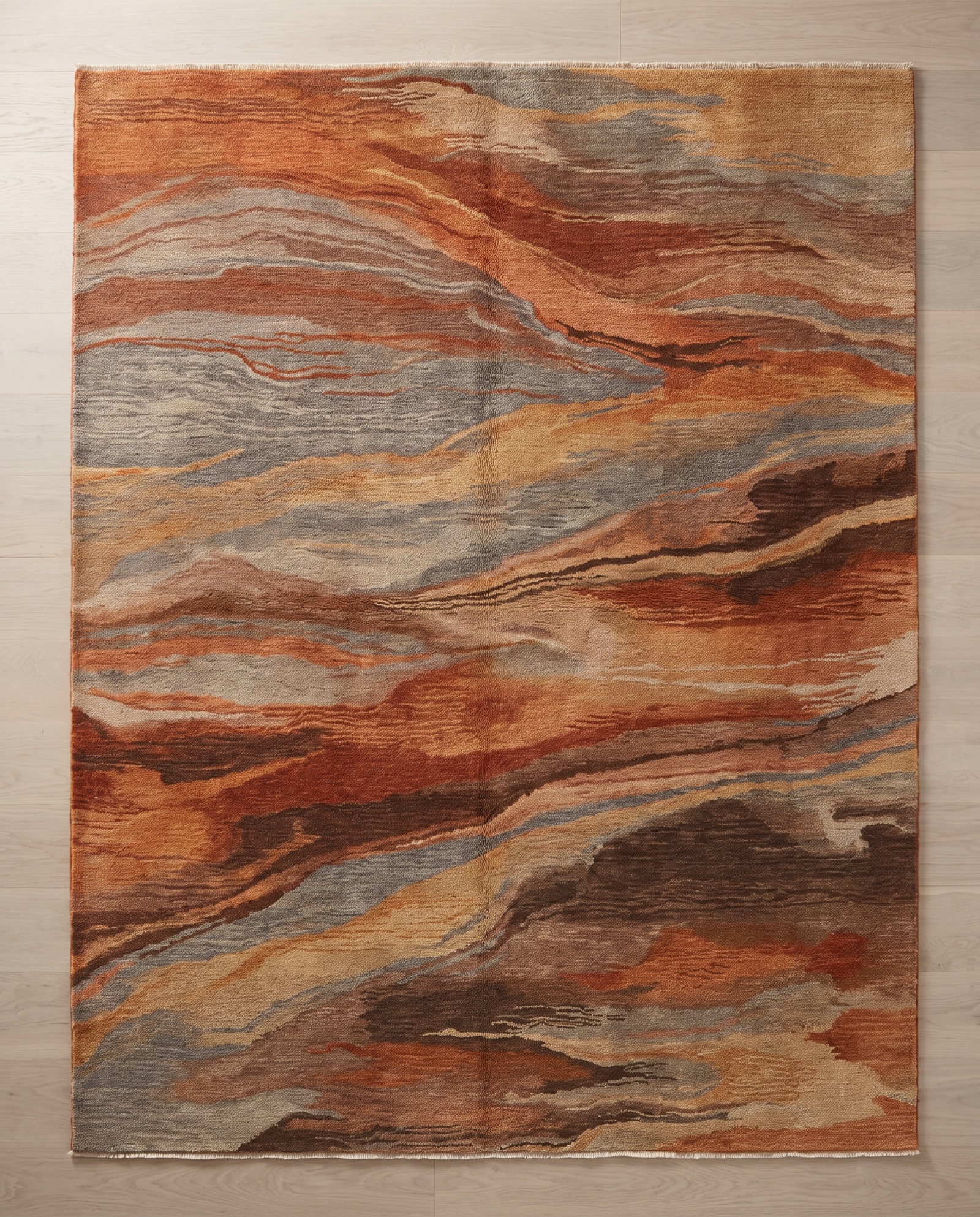
The Material Memory collection borrows that logic. Rather than depicting a landscape literally, each design translates the feeling of erosion — layered tone, soft transitions, texture that seems to have been worn into place rather than drawn — into a hand-knotted surface.
This is part of why we describe these pieces as textile objects rather than decorative rugs. A rug like Grand Canyon isn't trying to picture a place; it's trying to hold the same quality of time that shaped one — sediment, pressure, and the slow accumulation of change.
Practically, this means color transitions that shift gradually rather than in hard blocks, and pile texture that varies across the surface to suggest depth and erosion rather than a flat, uniform field.